
Poland
In Poland you can be sure of a terrific hunting experience
Highlights
- Hunting in State-owned Hunting Areas
- Professional Hunting Organization
- Well-tested Products
- Amazing Trophies
- Coveted European Game Species
- Strong Hunting Traditions
Our Favourite Hunting Destination
Poland is, with its size and varied nature, a real hunting paradise and for many hunters it is Europe’s premier hunting destination. Poland has more regulars amongst our customers than any other European destination, and many return here year after year. Everybody can hunt here – from the inexperienced first time hunter to old hands with many years of experience. In Poland you can find all our favourite game species, and population densities of game are very high. Trophy quality is improving year after year, thanks to professional game management and a very well organised hunting regime. Poland is also characterised by an exceptional degree of hospitality, and over the years many friendships have arisen between visiting foreign and Polish hunters.
About Poland
Poland shares a border with 7 different countries: Germany, The Czech Republic, Slovakia, The Ukraine, Lithuania, Belarus and Russia (Kaliningrad). Moreover, Poland has a long northern border with the Baltic Sea. Poland, at 312.685 km2 in size, is the 9th largest country in Europe with around 38.5 million inhabitants, of which 90% are catholics.Through the northern part of the country flow the rivers Wisła, Wartha and Odra. Large areas are covered in forest. the central part of Poland is predominantly flat, fertile and has a large agricultural production. The southern part of the country is more mountainous but less fertile. Poland is a country undergoing rapid development, and has much to offer. Here you can find everything from medieval architecture, castles from the age of knights and chivalry, large modern cities to rural areas where the preferred mode of transport is a horse and cart.
Hunting in Poland
Diana Hunting Tours offer a wide range of the very best State Forest Districts, with whom we have been working with for decades. We know that everything is well organised, the hunting personnel well trained, experienced and responsible , and our long term agreements with these districts are our customers guarantee that they will receive a high quality product. In Poland hunting is only carried out of nature’s own terms. Hunting always takes place in the open countryside - hunting in fenced enclosures is prohibited by law. The same is true for the “cultivation” of large trophies using artificial means.
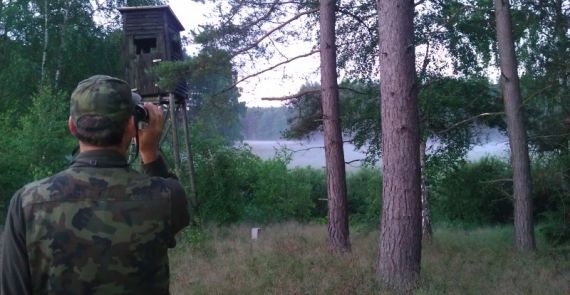
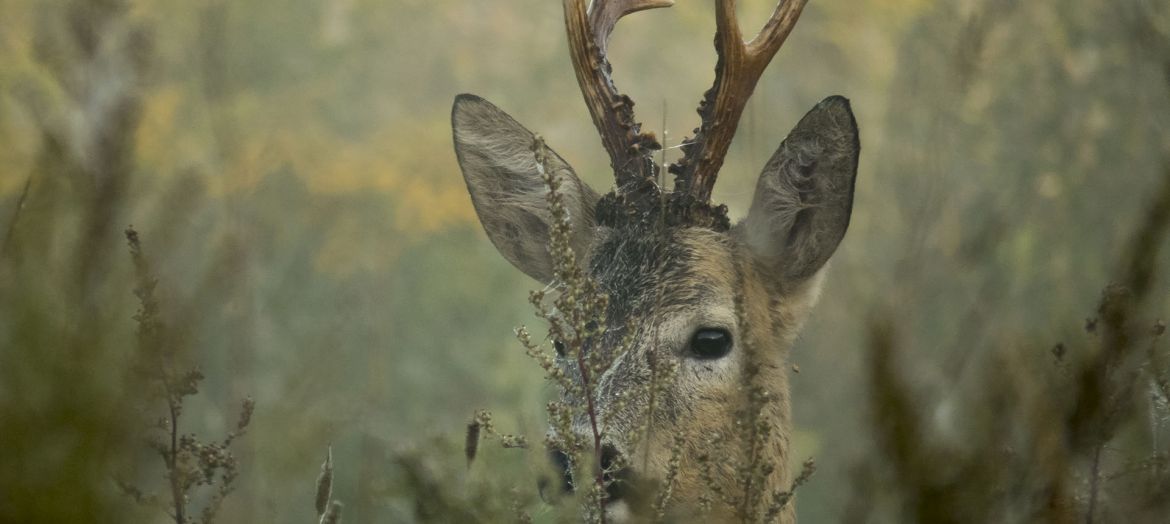
Polish hunting districts are large – roughly speaking from 3,000 to 30,000 hectares. The most popular game species are roe deer, red deer and wild boar, but Poland is also home to good population of fallow deer, mouflon, fox, racoon dog, ducks and geese - in a few individual districts you can even find European bison (wisent). All hunting in Poland is carried out with your own individual hunting guide, who knows his district inside out. It is this hunting guide who will point out the game you are permitted to shoot. On individual hunts you will typically go out hunting twice during the day, from early in the morning before sunrise and again in the late afternoon/evening around the hours of sunset. On driven hunts hunting takes place all day - but for safety reasons only when the light is good.
Accommodation in Poland
Our hunters normally stay with the head gamekeeper and his family in the hunting district itself. The standard of accommodation has developed rapidly in recent decades, and in by far the most districts, can be described as good. Meals are generous in size and of a very good standard, prepared with good local ingredients, and often featuring game. Only water, coffee and tea are usually served with meals, so if you prefer to drink soft drinks, beer, wine or spirits, you will need to bring your own beverages.
Polish Culture
In Poland it can be a great idea to combine hunting with a family holiday - especially if your family enjoys outdoor activities. You can also choose to hunt in a district close to one of the larger cities, which will give a great opportunity of experiencing Polish culture. It is also still very cheap to go shopping in Poland. Some districts offer you the chance to go fishing, or to take a ride in a horse drawn cart, but it is always a good idea to let the district know about your wishes in good time before your arrival.
Quite simply Poland can offer everything, you simply need to pack your suitcase and rifle, and off you go. Some great adventures await you in this wonderful hunting destination!
Video Gallery
-
 Hunting in Polen
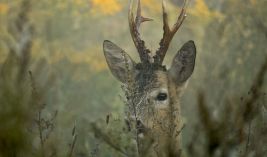
Game

Red Deer/Red Stag (Europe)
Scientific Name: Cervus elaphus Subspecies: We recognise the following subspecies for Europe: East European Red Deer (C.e. montanus) Corsican Red Deer (C.e. corsicanus) Distribution: Red Deer is found in most European countries. Habitat: Woodland, pasture land, wetlands and moorland. Is found in lowlands as well as on high ground and in mountains. Description: Large deer weighing...
Read moreHunting stories
Jagttur til Zmigrod oktober 2018
Vores tur startede fredag morgen med kurs mod Polen, hvor alle Havde meget store forventninger til nogle dage med jagt og afslapning for min kone og hunden. Som debutant i hjortejagt havde jeg specielt glædet mig. Efter en overnatning nåede vi reviret lørdag midt på dagen og efter frokost var der testskydning af riffel og derefter en aftenpursh. Derefter resterede 3 hele jagtdage med morgen jagt og aftenjagt. Disse dage blev uforglemmelige med spændende pursch en super jagtguide og godt selskab af tre gæve jyske jægere. Reviret levede op til alle beskrivelser og med en super service og gode værelser var de Polske værter medvirkende til at vi fik en god oplevelse ud af opholdet.
Udbyttet af jagtopholdet stod også mål med alle forventninger en meget stor dåhjort, en kronhjort og en hind. Jeg kan kun anbefale Zmigrod reviret, hvor vildtet var talrigt og hele oplevelsen både af jagt og revir gav en oplevelse for både mig som jæger og min kone som jagt interesseret medrejsende.
Tak til Diana Limpopo for en perfekt service og hurtige svar på amatørernes mange spørgsmål om rejse og ophold. Og tak til Søren, Nikolaj og Rasmus for godt selskab og hyggelige stunder.
Catrine og Hans Eriksen
Game
Red Deer/Red Stag (Europe)
Scientific Name: Cervus elaphus Subspecies: We recognise the following subspecies for Europe: East European Red Deer (C.e. montanus) Corsican Red Deer (C.e. corsicanus) Distribution: Red Deer is found in most European countries. Habitat: Woodland, pasture land, wetlands and moorland. Is found in lowlands as well as on high ground and in mountains. Description: Large deer weighing...
Read moreSpecial conditions for Poland
Single room supplement
Unless agreed otherwise all accommodation is in double- or 3/4-bedded rooms. A supplement for
single room will be charges for, if:
• you travel alone
• a group has an uneven number of persons
• you are given a single room in the accommodation – REGARDLESS of the reason
• you sleep alone in a room with more beds
• you book a single room
Transport during the hunt
For most hunting districts a fixed price for transport during the hunt has been agreed. The price is
per hunter, regardless if you are provided with an “individual” vehicle or not. The price vary from
Euro 50-80 per hunter per day.
The hunt
In Poland all hunting is on 1:1 basis – so that each hunter has his own hunting guide. The Polish
hunting guide is responsible for choosing the game to be shot, but it is always the guest hunter
who – after having been given permission to shoot – decides if he/she wants to shoot or not. The
hunting
guide always does his best to comply with the wishes of the hunter, but it is always the person
behind the rifle who takes the final decision.
Extra days hunting
If you wish to extend your stay by one or more days, this should be arranged with your interpreter
or us during your stay. In some cases an extension may not be possible.
Interruption of hunting
If, for any reason, you leave the hunting district early, there will NOT be any reimbursement to
clients for any planned activities that have been booked but not carried out.
Extra meals
A lengthened stay including a single meal will be charged at EURO 25,-. A lengthened stay that
includes 2 meals will be charged at the rate for a full extra day´s accommodation.
Dogs
If you bring your own dog you will be charges a sum of Euro 10,- per day, which will normally be
payable directly to the hunting district. Please be aware that not all hunting districts will accept
clients bringing their own dogs. To enter Poland a dog must have a valid dog passport and be able
to be identified with a readable ear tattoo or microchip.
Interpreter
An interpreter is obligatory for all hunting districts. Please inform us in advance whether you would
prefer an English og German speaking interpreter. In some districts the interpreter = hunt
manager or hunting guide
Agreements
Agreements between DIANA´s clients and staff/forester in the districts will not be accepted under
any circumstances. Any hunting guest is responsible for his signed protocol – regardless of
“private” agreements – verbal or written.
Trophy deposit
When you confirm your booking of one of our hunts, we will request a trophy fee deposit. On your
return home this amount will be adjusted to reflect the actual results of your hunt. The deposits
are as follows:
Red stag: Euro 1,350,-
Roebuck: Euro 300,- (per roebuck)
Fallow buck: Euro 1,000,-
Wild boar Euro 300,-
Mouflon Euro 1,350,-
Driven/small driven hunts Euro 410,-
Doe-Hind Hunt Euro 300,-
Game shot out of season:
The Polish authorities have introduced a system of charges for game shot during the close season.
The charges are as follows:
Red deer: 5,800,- zloty
+ 2,000,- zloty for trophies up to 5,5 kg
+ 7,000,- zloty for trophies over 5,5 kg
Fallow deer: 2,300,- zloty
+ 1,500,- zloty for trophies up to 2.6 kg
+ 3,000,- zloty for trophies over 2.6 kg
Sika deer: 5,500,- zloty
+ 1,000,- zloty for trophies up to 2.0 kg
+ 2,500,- zloty for trophies over 2.0 kg
Roe deer: 2,000,- zloty
+ 1,000,- zloty for trophies up to 430 g
+ 5,000,- zloty for trophies over 430 g
Mouflon: 1,800 zloty
Wild boar: 2,300 zloty
Other species: 1,000,- zloty
Game shot within the hunting season but without permission of the hunting leader has to be paid
according to the trophy price list + a punishment of 100%.
Protocols
We advise all hunters to oversee the weighing and measurement of trophies before signing the
hunting protocol – regardless of which package you bought.
If a hunter wishes to bring home the whole head of a game animal, its weight will be set in the
hunting district. The cost will then be calculated from that weight. We therefore CANNOT
recognize any claims arising from this.
This also applies to the measurement of wild boar tusks. If a hunter wishes to bring home the
whole head, the tusks will be measured with the visible part being assumed to make up to 1/3 of
the total length.
Trophies are normally weighed and measured 24 hours after boiling. If a hunter leaves the district
earlier than 24 hours after the trophy was boiled, it will be the wet weight that will be entered on
the
protocol and it will not be possible afterwards to claim any refund on the price charged –
regardless of circumstance.
If you, for any reason, have cause to lodge a complaint or request a refund, this HAS TO be done
in the protocol or it will not be possible for us to handle you case after you return home. Please
note that when you sign the protocol you confirm that everything stated within it is
100% correct.
Settling of your final account
The settling of your final account will take place after we have received the hunting protocol from
Poland, which can take 4-6 weeks, regardless if monies will be refunded or an extra charge made.
An extra invoice has to be paid within 10 days, also if you by any reason have decided to
leave the trophy and/or skins etc. in the district for later pick up or posting. Please be
aware that sick
or previously wounded game shot by the guest hunter and entered into the protocol has to be paid
according to the usual price list.
Alcohol
It has been determined by law that all hunts are to be reported to the police not later than 7 days
before the beginning of the hunt – stating the exact dates for the hunt and the address of the
accommodation. This means that unannounced inspections can occur. They want to check if all
personal papers are okay and also if the hunters are hunting with alcohol in the blood. The blood
alcohol level for driving in Poland is 0.0% and the same goes for carrying the rifle.
Choice of calibre
Polish regulations state the following ROE DEER: From 100m the bullet must have energy on
impact of 1,000 joules. OTHER GAME: From 100m the bullet must have energy on impact of 2,000
joules.
Driven-/small driven hunts
Please be aware that it is only allowed to use telescopic sights of max. x3 magnification for driven
and small-driven hunting. Variable sights that can be adjusted down to x3 magnification and below
are allowed. That is to say that, for example a 2.5 – 10x magnification is allowed. Sights with a
fixed magnification of more than x3 are not allowed. According to the polish law each hunter HAS
to wear min. 2 elements in fluorescent colours – it means yellow or orange.
Gratuities
It is normal to give a small tip to your hunting guide, to the translator and the kitchen. How much
you give is up to your own discretion.
Full Moon Calender 2025/26
13th January
12th February
14th March
13th April
12th May
11th June
10th July
09th August
07th September
07th October
05th November
05th December
03rd January
01st February
03rd March
Hunting season 2025/26
Roebuck 10.05.-30.09.
Roe deer does/lambs 01.10.-15.01.
Red stag 20.08.-28.02.
Red deer hind 30.08.-15.01.
Red deer calf 30.08.-28.02.
Fallow stag 30.08.-28.02.
Fallow deer does 30.08.-15.01.
Fallow deer kids 30.08.-28.02.
Wild boars Whole year
Driven-/small driven hunts 01.10.-15.01.
Mouflon rams 01.10.-28.02.
Mouflon ewes/lambs 01.10.-15.01.
Fox 31.05.-31.03.
Racoon dog Whole year
Badger 30.08.-30.11.
Wild ducks 15.08.-21.12.
Wild geese, West Poland 01.09.-31.01.
Hunting Area
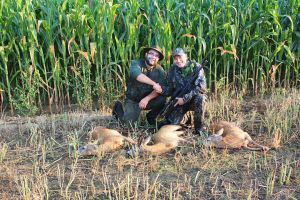
Brodnica
The Brodnica state hunting district in northern Poland covers a total area of 9,690 ha. of which 2,613 is woodland, while the remaining 7,077 ha. consists of farmland, meadows, lakes, rivers and streams. The woodland is largely Scots pine (70%), but there is also oak (10%), beech (10%), birch (5%) and alder (5%) - a nice mixture of many different species. The district is generally...
Read more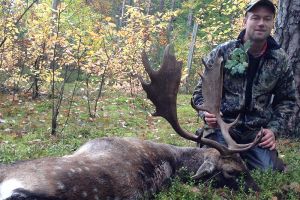
Chojna
The Chojna state hunting district in north west Poland covers a total area of 13,820 ha. of which 9,354 ha is forest, while the remaining 4,466 ha consists of farmland. meadows and lakes. The forest is mainly coniferous (76%), but 5% consists of beech, 9% oak and the rest mixed broadleaf woodland. The district is mainly flat, but some parts of the district are slightly hilly. Chojna has 40...
Read more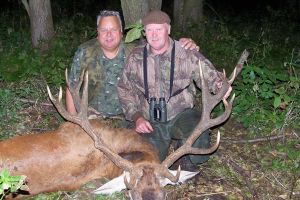
Zamrzenica
The Zamrzenica state hunting district is 17,274 ha. in size, of which 9,700 ha. is forest and the remaining 7,574 ha. farmland, meadow, lakes and wetlands. The forest is predominantly coniferous (circa 80%), but there are also areas of oak, birch and other broadleaf trees. The district is generally flat, but some areas are slightly hilly. Zamrzenica has over 125 high seats/stands and 50 feeding...
Read more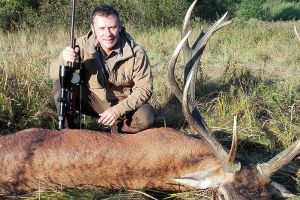
Zmigrod
The Zmigrod is our longest standing state hunting distric,t with whom we have been working in partnership with since 1978. It covers a total area of 27,284 ha., of which 11,202 ha. is forest, while the remaining 16,082 ha. consists of farmland, meadow, lakes and wetlands. The forest is made up of 64% coniferous trees, 14% oak and 14% alder. The district is predominantly flat. Zmigrod can offer...
Read more